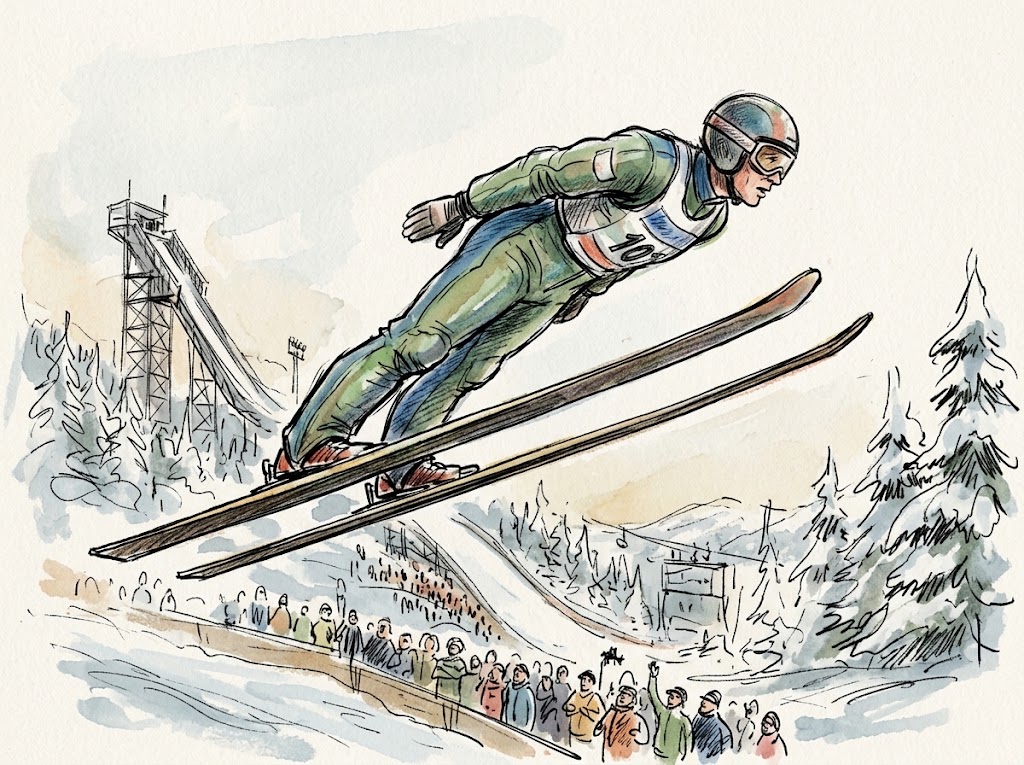
Janne Boklöv
October 11, 2026
I’ve always liked things that make sense. Clear expectations, consistent processes, a reasonably convincing explanation for why we do something the way we do. There is something reassuring about a system in which everyone knows the rules. It feels fair, sensible, and difficult to argue against. How could consistency possibly be a bad thing?
Lately, though, I’ve started wondering what we give up when making things consistent becomes an ambition in itself. Perhaps calling it “making everyone fit” rather than “creating structure” would have had me questioning it sooner.
Walking around Chalmers, between the brick buildings and past the glass doors, I sometimes find myself thinking about the distance between an organisation and the ideas it hopes to produce. There are coffee cups heading towards meetings, equations left on whiteboards, and someone bent over a screen, absorbed in a problem whose significance is not immediately available to the rest of us.
Against this everyday backdrop sits a rather extraordinary ambition: to develop into a world-class technical university. Chalmers strategy explicitly includes creating better conditions for its faculty and challenging established systems by incorporating a culture of exellence. The question I keep returning to is what that requires of us when an unfamiliar idea arrives looking less like excellence and more like an inconvenience.
My current view, which will probably need revising before too long, is that we are much more comfortable celebrating originality than accommodating it. Originality, once successful, is an excellent thing to put in a strategy document. Before that, it tends to require explanations, exceptions, and meetings that run slightly beyond their allotted time.
I find myself thinking about Janne Boklöv.
In a sport where the established technique kept the skis parallel, he helped popularise jumping with them spread into a V. The technique produced longer jumps, but it also attracted criticism and lower style scores. He went on to win the overall World Cup in the 1988–89 season. By the 1992 Olympics, every ski-jumping medallist was using the V-style.
There is something almost too convenient about this story. The judges had one idea of what a good jump should look like; the air appeared to have another.
With hindsight, we know which side to take. Of course we would have supported the innovation. Of course we would have noticed that the supposedly incorrect technique was achieving something worthwhile. We imagine ourselves watching the distance rather than deducting the style points.
I’m less certain about that.
Before the results settle the argument, an unconventional approach is simply an unconventional approach. It might be a breakthrough. It might also be a bad idea. The uncomfortable part is that we have to respond before knowing which story we are in.
This is perhaps the central difficulty. We want the benefits of people challenging our assumptions without having to endure the period in which our assumptions are being challenged. We want the trailblazer, preferably after someone else has dealt with the troublemaker.
Fine, this is probably a little unfair to structure. Shared rules matter. Fairness matters. Not every exception deserves to be granted, and refusing to follow a process does not automatically make someone a misunderstood pioneer. Sometimes the form really does need filling in.
But I suspect there is room between abandoning the rulebook and treating it as the final authority on what is possible. We can ask why a rule exists. We can distinguish between something that protects a necessary principle and something that merely preserves a familiar arrangement. And we can remain open to being persuaded without requiring the person persuading us to be entirely convenient.
I don’t have a particularly elegant solution to this. I would still prefer the meeting to finish on time, and I remain suspicious of anyone who describes every disagreement as evidence of their own visionary thinking.
All I can really change is my own first response. A little less insistence that unfamiliar ideas make themselves comfortable. A little more willingness to stand by an idea before it becomes easy to defend.
So, until I work out something better, I’ll try to be a little less reasonable about the things I believe matter, and a little more patient when someone else does the same.
My apologies in advance if the skis don’t quite line up.